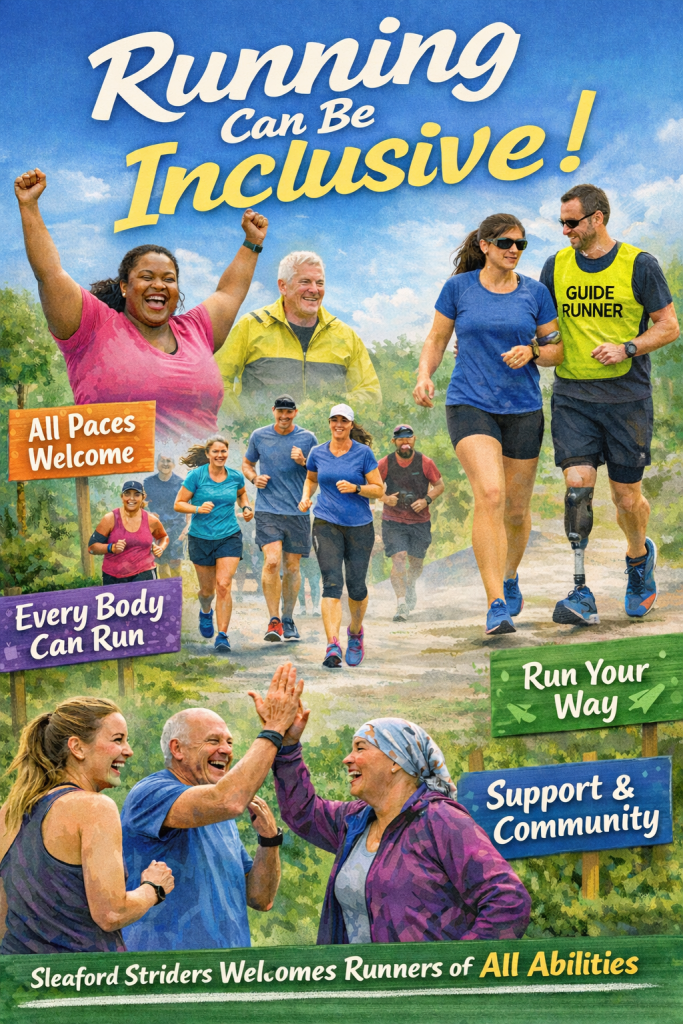
Running has a reputation for being one of the simplest sports in the world: you just put on shoes and go. But for a lot of people, it hasn’t always felt that simple. Traditional running culture can sometimes lean heavily toward speed, competition, and “personal bests,” which can unintentionally make people feel like they don’t belong unless they’re fast, experienced, or built a certain way.
The truth is, running can be one of the most inclusive activities out there — and when it’s approached with the right mindset, it becomes something almost anyone can take part in.
Running is for more than “fast people”
One of the biggest myths about running is that you have to be quick for it to count. But running isn’t a test you pass or fail. It’s movement. It’s progress. It’s showing up.
Whether someone runs a 5K in 18 minutes, jogs part of it, walks the hills, or takes breaks along the way, they’re still a runner. The experience and benefits are real regardless of pace.
It’s adaptable to different bodies and abilities
Unlike many sports that require specific skills, equipment, or physical traits, running can be shaped around the runner. People can run:
- Short distances or long distances
- On flat ground or trails
- With walking intervals
- With mobility aids or support
- With a guide runner
- At a pace that suits their body
Running can also work for people returning after injury, living with disability, managing chronic conditions, or simply starting from scratch. It’s not about forcing everyone into the same mould — it’s about letting the activity fit the person.
The community matters as much as the sport
The most powerful part of inclusive running isn’t the act itself — it’s the environment around it.
When running groups celebrate participation instead of performance, people feel safer to join. When beginners aren’t left behind, they return. When slower runners are treated with the same respect as faster ones, the whole culture changes.
Inclusivity is not just saying “everyone is welcome.” It’s actively creating spaces where people feel welcome — in how routes are planned, how leaders behave, how encouragement is shared, and how success is defined.
Representation changes who feels they belong
People are more likely to try running when they see runners like themselves: older runners, plus-size runners, disabled runners, runners from different backgrounds, runners who walk-run, runners who aren’t aiming for medals.
The more diverse running looks, the more accessible it becomes. And the more accessible it becomes, the more it grows into what it always should have been: a sport for everyone.
Progress isn’t one-size-fits-all
An inclusive running culture understands that “improvement” looks different for everyone.
For one person, progress might mean training for a marathon. For another, it might mean running for five minutes without stopping. For someone else, it might mean having the confidence to show up in public and move their body without fear of judgement.
All of these wins matter. All of them deserve respect.
Inclusive running builds healthier, stronger communities
When running becomes inclusive, it stops being just a sport. It becomes a tool for wellbeing, connection, and empowerment. It helps people build confidence, manage stress, improve mental health, and feel part of something.
And perhaps most importantly, inclusive running sends a simple message: you don’t have to earn your place here.
You already belong.
this is why Sleaford striders welcomes runners of all abilities